
Solar Radiation and Cybersecurity: Analysis of the Airbus software failure
Solar radiation, often referred to as space weather, poses a significant and unique threat to cybersecurity and digital infrastructure, creating risks that are distinct from malicious cyberattacks. The primary risk is not a hacker exploiting a vulnerability, but a natural phenomenon causing physical damage and data corruption to the hardware and communications systems that underpin global digital networks.
Rodrigo Rivera Vidal
11/30/20256 min read

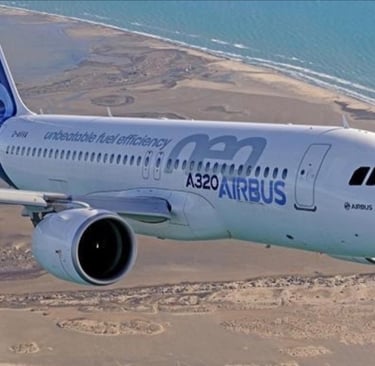
Solar Radiation and Cybersecurity: Analysis of the Airbus software failure
Rodrigo Rivera Vidal Board Member - Technology Delegate. Global Wealth Forum. London, U.K. https://gw-forum.org/about-us/ Cyber Defense Trainer - Keynote Speaker. Champions Speakers. London. U.K. https://champions-speakers.co.uk/speaker-agent/rodrigo-rivera-vidal Cyber Defense Trainer - Keynote Speaker. Cybersecurity Speakers. London, U.K. https://cyber-security-speakers.com/speaker/rodrigo-rivera-vidal Offensive Security Engineer / DevOps Engineer / Security Researcher. Member - ASICI, Spain. https://www.asici.org/
Solar Radiation and Cybersecurity
Solar radiation, often referred to as space weather, poses a significant and unique threat to cybersecurity and digital infrastructure, creating risks that are distinct from malicious cyberattacks.
The primary risk is not a hacker exploiting a vulnerability, but a natural phenomenon causing physical damage and data corruption to the hardware and communications systems that underpin global digital networks.
The Threat: Space Weather Phenomena
Solar radiation comes in various forms, primarily from Coronal Mass Ejections (CMEs) and Solar Flares, which cause three main types of risk to technology:
Impact on Cybersecurity:
Power Grid Collapse: GICs can overload and permanently damage large transformers in the electrical grid, leading to widespread and long-lasting power outages. Since all digital systems (servers, routers, data centers) rely on electricity, a widespread power blackout would cause a massive, sustained "cyber outage" with cascading failures across all sectors.
2. Single-Event Effects (SEEs) and Data Corruption
Cause: High-energy particles from solar flares and cosmic rays, particularly at high altitudes or in space, can physically penetrate electronics, especially modern, sensitive microchips.
Impact on Cybersecurity:
Bit Flips: A single particle strike can cause a Single-Event Upset (SEU), where a bit of data in a memory cell or processor register flips from a 0 to a 1, or vice versa. This is a form of data corruption that is non-malicious but can cause systems to lock up, execute phantom commands, or produce incorrect data.
Critical Systems: This is a major concern for systems with strict reliability needs, such as:
Aircraft Avionics: As seen in the Airbus A320 failure, a bit flip in a flight control computer can lead to a dangerous, uncommanded event.
Satellites: SEUs are common in space and can cause navigation errors, software resets, and, in severe cases, the complete failure of a satellite's electronics.
3. Communication Disruption
Cause: Solar flares emit X-rays and Extreme Ultraviolet (EUV) radiation that cause rapid, intense ionization of the Earth's upper atmosphere (the ionosphere).
Impact on Cybersecurity:
GPS/PNT Degradation: The signals from Global Positioning System (GPS) and other Position, Navigation, and Timing (PNT) satellites must pass through the ionosphere. Disturbances can cause signal loss, errors, or a complete failure of the timing reference used by critical infrastructure, including financial transactions, cellular networks, and utility control systems.
Radio Blackouts: This ionization can completely absorb or scatter high-frequency radio waves, causing shortwave radio blackouts essential for global air traffic control and emergency communications.
Mitigation Strategies
Since this is a physical threat, mitigation focuses on hardening the infrastructure:
System Redundancy: Using triple-redundant or "voting" systems (like those in modern aircraft) where three computers process the same data, and if one is corrupted by an SEU, the other two can correct the error.
Error Detection and Correction (ECC): Implementing hardware and software with ECC memory and parity checks to automatically detect and correct bit flips caused by radiation.
Physical Shielding: Utilizing thicker shielding or specialized radiation-hardened components, especially for satellites and aircraft, though this adds cost and weight.
Grid Resilience: Monitoring geomagnetic activity (via agencies like NOAA's Space Weather Prediction Center) and having protocols to temporarily disconnect or adjust vulnerable power grid components to reduce damage from GICs.
AIRBUS A320 Failure: Analysis
An analysis of a recent major Airbus software failure focuses on a vulnerability in the A320 family of aircraft that led to one of the largest recalls in the company's history.
Key Details of the A320 Software Failure
1. The Root Cause: Solar Radiation and Data Corruption
The Problem: Airbus analysis revealed that intense solar radiation (likely from solar flares or coronal mass ejections) could corrupt data critical to the functioning of the flight control systems.
Vulnerable Component: The specific vulnerability was traced to a combination of the ELAC 2 (Elevator and Aileron Computer) hardware and a recent software version (e.g., L104).
The ELAC system translates pilot commands from the side-stick into electronic signals to control the elevators and ailerons, which manage the aircraft's pitch (nose up/down) and roll.
2. The Triggering Incident
Recent Event: The global alert was issued following an incident where a JetBlue A320 aircraft experienced an uncommanded, sudden drop in altitude (a "pitch-down event") in October 2025, which injured several passengers.
Outcome: The investigation determined that data corruption in the ELAC computer, possibly due to solar activity, was a contributing factor.
The worst-case scenario outlined by regulators was an uncommanded elevator movement that could exceed the aircraft's structural capability.
3. The Scope and Impact
Massive Recall: Airbus ordered an emergency software fix for approximately 6,000 A320 family aircraft worldwide, representing over half of its global fleet of the narrow-body jet.
Operational Disruption: The mandatory fix, required before the next flight for affected aircraft, led to widespread flight delays and cancellations globally, particularly during a busy holiday travel period.
The Fix:
For the majority of affected jets, the solution involved reverting to an older, stable software version (e.g., L103+), which typically took a few hours per plane.
For a smaller number of older aircraft, complete hardware replacements of the affected ELAC computer were necessary, potentially leading to longer grounding times.
Analysis of the Failure's Significance
This event underscores several key challenges in modern aerospace software:
Environmental Vulnerabilities: Even highly redundant and certified systems, like Airbus's fly-by-wire architecture, can be susceptible to unpredictable external events like solar radiation causing "single-event upsets" or bit flips in electronic components. The software update failed to adequately mitigate the impact of this known hazard.
Complexity of Fly-by-Wire: The incident illustrates the inherent risks in complex, computer-controlled flight systems. A seemingly minor software change (L104 was intended to enhance safety features) introduced a critical vulnerability that was only discovered following an in-flight incident.
Speed of Response: The swift, mandatory recall by Airbus and aviation regulators (EASA, FAA) demonstrates the industry's focus on immediately addressing critical flight control issues, prioritizing safety over operational inconvenience.
The conclusion of the recent Airbus A320 software incident centers on the immediate identification and mitigation of a critical design flaw linked to the growing threat of space weather on modern avionics.
Conclusion of the Airbus A320 Incident
1. Root Cause: Solar Radiation-Induced Data Corruption
The investigation, triggered by the uncommanded pitch-down incident on a JetBlue A320 in October 2025, conclusively determined the following:
Vulnerability: A specific combination of the Elevator and Aileron Computer (ELAC) hardware, running software version L104 (a 2019 software load), was found to be vulnerable.
The Trigger: During periods of intense solar radiation (specifically, a solar particle event likely from an X-class flare), high-energy particles could penetrate the ELAC hardware.
The Failure: This penetration caused a Single-Event Upset (SEU), or bit flip, corrupting data critical to the flight control function. This corrupted data resulted in an uncommanded elevator movement, leading to the abrupt loss of altitude.
Worst-Case Risk: Aviation regulators (EASA and FAA) warned that, if not corrected, this condition could lead to an uncommanded elevator movement that might exceed the aircraft's structural capability.
2. Regulatory and Manufacturer Action
The ultimate conclusion was the largest-ever voluntary single-model recall in Airbus history, ensuring flight safety was prioritized over operational disruption.
Mandatory Directive: Airbus issued an Alert Operators Transmission (AOT), followed immediately by an Emergency Airworthiness Directive (EAD) from the European Union Aviation Safety Agency (EASA).
Fleet Impact: The directive affected approximately 6,000 A320 family aircraft globally—more than half of the worldwide A320 fleet.
The Immediate Fix (Software Rollback): For the majority of affected aircraft (estimated at around 80%), the mandatory fix involved a relatively quick process (a few hours) of reverting to an earlier, stable software version (e.g., L103) that contained the necessary radiation-mitigation filters. This was required before the aircraft's next flight.
The Hardware Fix: A smaller subset of older aircraft required more time-consuming hardware replacements or modifications to the ELAC unit.
3. Industry and Safety Takeaway
The incident serves as a major inflection point in aviation safety, forcing the industry to rapidly acknowledge and adapt to the increasing risks of space weather.
Despite the widespread flight cancellations and delays caused by the immediate grounding during a peak travel period, the swift and mandatory action across global airlines successfully mitigated a potentially catastrophic systemic risk
References:
https://interestingengineering.com/transportation/airbus-a320-glitch-airlines-fixing-issue
https://www.aerotime.aero/articles/a320-return-to-service-airbus-software-fixes-easa-directive
https://safefly.aero/airbus-a320-solar-flare-grounding-2025/
https://www.tomshardware.com/tech-industry/airbus-orders-immediate-software-fix-for-6000-a320-jets
#Cybersecurity #Avionics #AIRBUS #Software #Failure #Solar #Radiation #EASA #RodrigoRiveraVidal #Cyberdefense #Trainer #NATO #UK #GlobalWealthForum #Operations #Security #Researcher #Analyst
IoNity
We deliver global-scale IoT and cybersecurity solutions.
Contact
+56963455441
© 2025. All rights reserved.
Solutions
Expertise
erick@ionity.cl
CEO & FOUDER
Rodrigo Rivera V.
COO FOUNDER
Erick Alejandro Macaya.